Bleach Hogyoku Explained: Origins, Powers, and Aizen
Bleach Hōgyoku explained in clear terms: discover who created it, why Aizen wanted it, how it changed Rukia’s fate, and what its transformations reveal about power and identity.

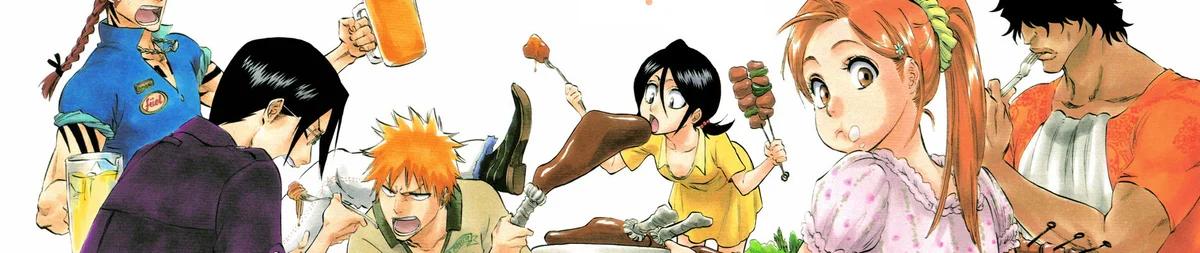
Spoiler warning: This article covers major reveals from the Soul Society, Arrancar, and Fake Karakura Town arcs. The Hōgyoku is the hidden object at the centre of Aizen’s conspiracy, Rukia’s execution, and some of Bleach’s most dangerous transformations.
What Is the Hōgyoku in Bleach?
The Hōgyoku is an artificial spiritual object created to transcend the boundary between Soul Reaper and Hollow powers. In practice, Bleach portrays it as something capable of enabling transformations that normal spiritual rules shouldn’t allow: Hollowfication in Soul Reapers, the advancement of selected Arrancar, and Aizen’s evolution after he fuses with it.
It isn’t a simple power-up item. Nobody picks it up, makes a wish, and gets a clean upgrade. The Hōgyoku’s effects are dangerous, unpredictable, and closely tied to the desires of the person using it—though the anime never fully explains its exact mechanism.
Its name is associated with destruction, collapse, and the breaking down of boundaries. That fits its role perfectly. The Hōgyoku matters because it makes fixed categories unstable. Hollow and Soul Reaper. Monster and person. Natural limits and forced evolution. Once it enters the story, those lines stop holding.
Confirmed anime events: Kisuke Urahara and Sōsuke Aizen each create a Hōgyoku. Aizen ultimately acquires Urahara’s version, combines their power, and uses the result in his attempt to surpass the limits of an ordinary Soul Reaper.
Interpretation: fans often describe the Hōgyoku as sentient or all-powerful. The anime gives it an eerie responsiveness, especially around Aizen, but it never confirms that the orb has a personality, a moral alignment, or a grand plan of its own. It behaves as though it can answer buried desire. That’s unsettling enough.

Who Created the Hōgyoku?
Urahara created the first known Hōgyoku through research into the barrier separating Hollow and Soul Reaper powers. He understood the scale of what he had made quickly enough to fear it. The Hōgyoku wasn’t just another forbidden device from his lab; it was a breakthrough with the potential to disrupt the spiritual order itself.
Aizen independently developed his own Hōgyoku. His interest in the object was never merely scientific. He saw it as a way to reject the limits imposed by Soul Society and to force a form of evolution beyond captains, Hollows, and every hierarchy he resented.
That difference between the two men is crucial. Urahara creates something he believes must be hidden. Aizen creates something he wants to use. They reach toward the same forbidden territory, but one tries to contain the consequences while the other treats consequences as proof that he’s onto something worthwhile.
Urahara’s hidden Hōgyoku
After his exile from Soul Society, Urahara conceals his Hōgyoku inside Rukia Kuchiki’s specially made gigai. The artificial body suppresses Rukia’s spiritual powers while hiding the orb inside her, leaving Rukia unaware that she is carrying the object Aizen has been searching for.
It’s one of Urahara’s most consequential decisions. The concealment protects the Hōgyoku from immediate discovery, but it also puts Rukia directly in Aizen’s path. Her arrest initially appears to be punishment for transferring her powers to Ichigo. In reality, Aizen’s scheme turns that legal crisis into cover for retrieving the Hōgyoku.
Rukia is never treated as a person by Aizen’s plan. She is a container, a target, and a convenient piece on a board he has been arranging for years. That coldness is part of what makes the Soul Society reveal hit so hard.
Aizen’s research and theft
Aizen conducts forbidden experiments involving Hollowfication long before he openly betrays Soul Society. The Visored are among the clearest evidence of those experiments: Soul Reapers forcibly exposed to a process that was potentially fatal and deeply destabilizing, even though they ultimately retained their identities.
His fake death, manipulation of Central 46, and pressure to carry out Rukia’s execution all serve the broader operation to obtain Urahara’s Hōgyoku. Aizen doesn’t need the Sōkyoku itself to extract the orb. He uses the execution crisis to gain access to Rukia, then removes the Hōgyoku through his own methods once his plan is in place.
The sheer scale of the deception tells you what the object means to him. Aizen is willing to manufacture a murder mystery, manipulate Soul Society’s leadership, and send captains into conflict with one another to get his hands on it. The Hōgyoku is a central motive behind his conspiracy, not just a shiny reward waiting at the end.
How the Hōgyoku Affects Hollows and Soul Reapers
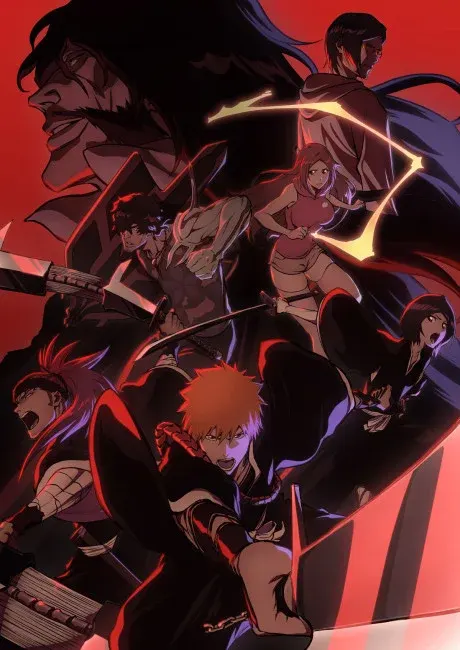
The Hōgyoku is portrayed as a means of breaking down or transcending the boundary between Hollow and Soul Reaper power. Bleach never reduces that process to a neat set of rules, but it repeatedly shows the danger of crossing that line by force.
A Soul Reaper can undergo Hollowfication and develop Hollow traits or abilities. The Visored demonstrate that this process can be survived, but their existence is not proof that it is safe. Aizen’s experiments were involuntary, and the people caught in them were pushed into a condition that could have killed them or stripped away control.
A Hollow can become an Arrancar by removing part of its mask and taking on a more human form with Soul Reaper-like abilities. Arrancar existed before Aizen’s use of the Hōgyoku, so the orb is not the origin of every Arrancar in his army. What it does is help Aizen advance his experiments and enhance selected Arrancar beyond what he could otherwise achieve.
That distinction matters. Aizen doesn’t build Hueco Mundo from nothing. He recruits existing Hollows and Arrancar, then uses the Hōgyoku to create, evolve, or empower parts of his force. The result is an army built around the same boundary-crossing that defines his own ambitions.
Arrancar also aren’t simply Soul Reapers wearing Hollow aesthetics. Their Zanpakutō seal their original Hollow power, and their Resurrección releases it again. The visual design makes that idea immediate: the broken masks, exposed holes, white uniforms, and sword forms all show beings suspended between categories Bleach usually keeps separate.
The outcomes of forced transformation vary. Some characters gain immense power and altered forms. Others lose control, become unstable, or die. The Hōgyoku opens a door, but it doesn’t promise that anyone walking through it will emerge intact.
Aizen, Desire, and the Hōgyoku’s Strange Power
The anime strongly suggests that the Hōgyoku responds to the deepest desires of its user. It doesn’t function like a literal wish-granting machine, and Aizen can’t simply order it to make him invincible. Its effects arrive through transformation, escalation, and possibilities the user may not fully understand.
Aizen’s fusion with the Hōgyoku is the clearest example. During the battle in Fake Karakura Town, he undergoes repeated transformations as he tries to reach a state beyond ordinary Soul Reapers. The changes are not cosmetic upgrades. Each new form strips away another layer of the captain Aizen once pretended to be.
The animation and character design sell the point. Aizen’s controlled, immaculate captain’s silhouette gives way to increasingly unfamiliar forms: his face and body alter, his clothing is swallowed by the transformation, and the clean visual authority he once projected becomes something more alien. He wants transcendence. The Hōgyoku makes that desire visible.
Confirmed anime events: Aizen fuses with the Hōgyoku, gains new forms during his fight with Ichigo, and repeatedly evolves while pursuing power beyond the Soul Reaper state.
Interpretation: Aizen’s eventual defeat suggests that his relationship with the Hōgyoku is more complicated than total mastery. He insists that he stands above everyone, yet the story leaves room to read his evolution as exposing desires he refuses to admit even to himself. The orb may answer desire, but desire isn’t always the same thing as conscious intention.
That ambiguity is why the Hōgyoku remains more interesting than a standard superweapon. It doesn’t just amplify what someone says they want. It appears to drag their inner contradictions into the open.

Why the Hōgyoku Drives Bleach’s Biggest Turning Points
Rukia’s execution is where the Hōgyoku stops being hidden backstory and becomes the engine of the Soul Society arc. Ichigo and his friends enter Soul Society to save Rukia from an unjust sentence, while Aizen uses the entire crisis as cover for his own objective.
Once Aizen reveals himself and leaves with the Hōgyoku, the conflict changes scale. The threat is no longer limited to Rukia’s fate or a corrupt ruling decision inside Soul Society. Aizen now has the object he needs to push his experiments further, strengthen parts of his Arrancar force, and challenge the balance between the worlds.
The Hōgyoku also sharpens Urahara’s role in the story. He isn’t only the mysterious shopkeeper who knows more than he says. His research created the object Aizen needs most, and his decision to hide it inside Rukia directly shaped the danger she faced. Urahara’s secrets save lives at times, but Bleach never lets him off the hook for the damage those secrets can cause.
In the Arrancar and Fake Karakura Town arcs, the Hōgyoku turns Aizen from mastermind into subject of his own experiment. He no longer directs transformation from a safe distance. He makes himself the proof of his philosophy.
That makes his conflict with Ichigo more than a hero-versus-villain power contest. A useful reading of Ichigo’s development is that he grows by confronting and accepting the conflicting parts of himself. Aizen takes the opposite route. He seeks to dominate every limit, deny every vulnerability, and turn evolution into conquest.
What the Hōgyoku Means in Bleach
Confirmed anime events: the Hōgyoku is connected to research into crossing the boundary between Hollow and Soul Reaper powers. It plays a role in Aizen’s Hollowfication experiments, the enhancement of selected Arrancar, and Aizen’s own transformations. It is also a central catalyst in Aizen’s conspiracy against Soul Society and the escalating conflict that follows.
Its major demonstrated uses involve dangerous transformations, uncertain results, or significant costs. Bleach doesn’t present the Hōgyoku as a safe shortcut to power. It is a device that makes impossible change possible, then forces everyone involved to live with what that change reveals.
Interpretation: the Hōgyoku represents ambition with no natural stopping point. Urahara fears it because he knows discovery can outrun good intentions. Aizen worships it because it offers an escape from every structure he refuses to accept.
That’s why the Hōgyoku works as more than a glowing plot device. It makes Bleach’s obsession with identity physical. What happens when the categories that define you collapse? Aizen tries to force an answer. Ichigo has to live one.

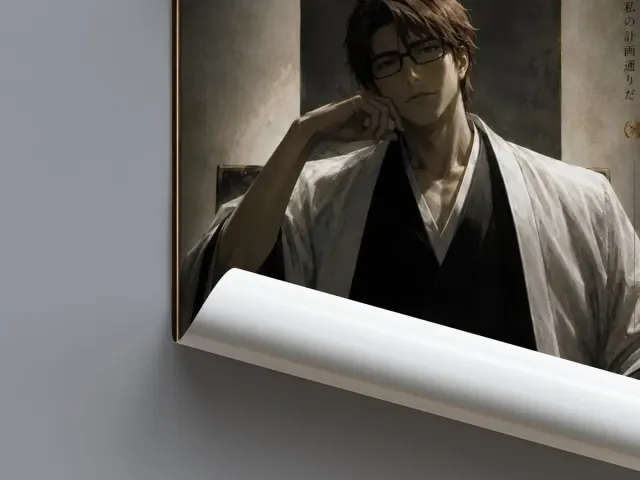
Related: Minato Namikaze Naruto Poster · Tanjiro Kamado Demon Slayer Poster · Sosuke Aizen Bleach Poster · Browse the full catalogue
Frequently Asked Questions
No. The Hōgyoku is an artificial spiritual object created through research into the boundary between Hollow and Soul Reaper powers. It is separate from a Zanpakutō, although it can enable changes involving Zanpakutō-like abilities and Hollow power.
No. The anime does not present the Hōgyoku as a machine that grants any request on command. It appears to respond to deep desires through dangerous transformations and uncertain outcomes rather than cleanly fulfilling a stated wish.
Urahara hid the Hōgyoku inside Rukia’s specially made gigai after his exile from Soul Society. The gigai suppressed her spiritual powers while concealing the object from Aizen, though this decision made Rukia the target of Aizen’s retrieval plan.
The anime never confirms that the Hōgyoku has a personality, moral alignment, or independent grand plan. Its eerie responsiveness supports the interpretation that it reacts to buried desire, but that remains an interpretation rather than a confirmed explanation.
Aizen wanted to use the Hōgyoku to cross the limits imposed on an ordinary Soul Reaper and force his own evolution. By merging with it, he made himself the subject of the experiment and pursued forms beyond the captain state he had outgrown.
Our paper posters are printed on 300 GSM art board — thick, sturdy, and fade-proof with OEKO-TEX certified inks. We also offer canvas (poly-canvas on wooden stretcher frame), acrylic (3 mm glossy UV-printed), framed (1" black or white frame with laminated finish), and metal (1 mm aluminium with magnets). Every format is gallery-grade.
Every poster is made to order and typically arrives within 3-7 business days across India. Paper posters ship in protective carton tubes; framed and acrylic prints ship in rigid packaging. You'll receive a tracking link via email and SMS as soon as your order ships.
Shipping is free on every order, whatever you buy, and there is no minimum order. Where cash on delivery is offered, it adds a ₹40 handling fee; paying online has no extra charge.
More questions? See the full FAQ.
Ready to Fill the Walls?
Premium anime posters, printed on gallery-grade 300 GSM stock. Made to order, shipped across India.
Shop PostersMore from the Hub
 guide
What DPI Do Pro Players Use? What Matters More for Aim
Pro players often use 800 or 1600 DPI, but the real difference comes from in-game sensitivity, polling rate, and sensor quality. Learn a setup that fits your game, grip, and desk space.
 guide
Jujutsu Kaisen Posters: Which Sorcerer Belongs on Your Wall?
Jujutsu Kaisen Part 2 has no release date yet. Here is how to choose between 18 Jujutsu Kaisen posters, sorted by sorcerer, with a side-by-side of the three Toji designs.
 guide
Demon Slayer Posters: Pick by Art Style While You Wait for Part 2
No release date has been announced for Demon Slayer: Infinity Castle Part 2. Here is how to choose a poster from the Demon Slayer range by art style, and how to group them.